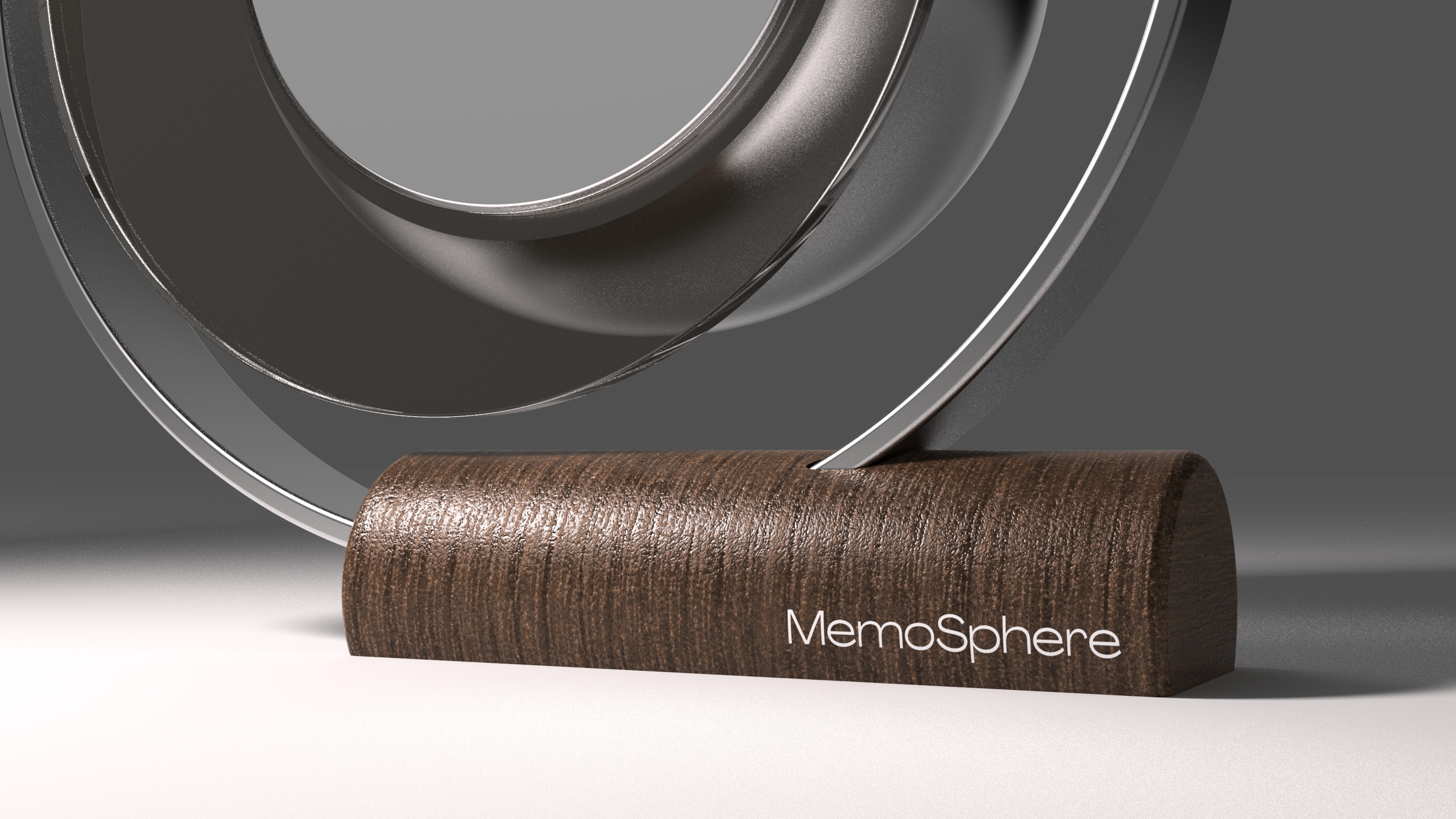
A guiding light
for memory and
mind.
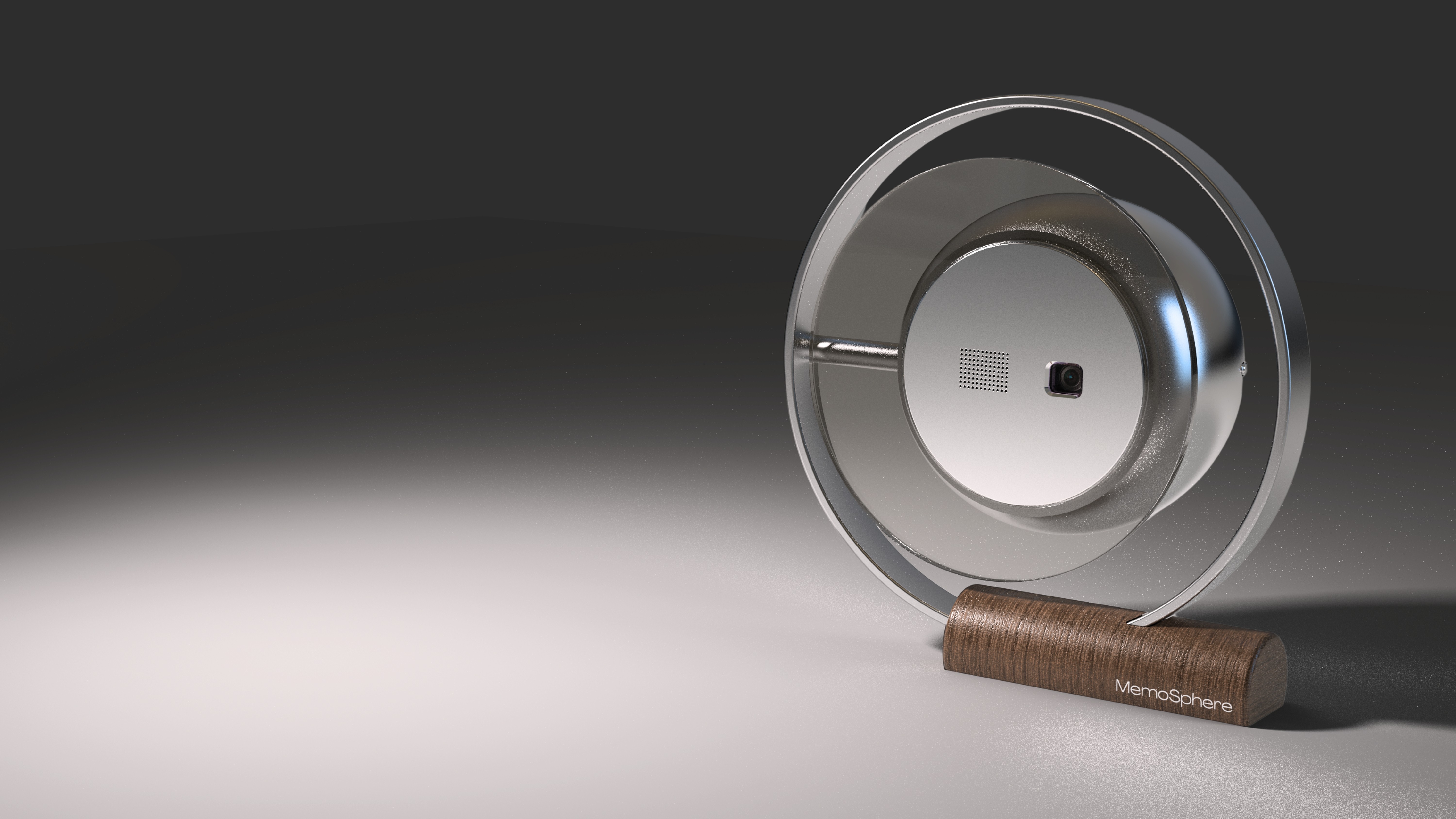
A project under the brief Design for Disability, focused on creating a product that enhances daily life for individuals with cognitive, physical, or sensory impairments. Building on this goal, Memosphere reimagines how individuals with Alzheimer’s experience time and routine through color-coded light cues, voice prompts, and motion detection.
Memosphere
2025
———————————————————
14 WEEKS
———————————————————
USER RESEARCH
CONCEPT DEVELOPMENT
PROTOTYPING & FORM EXPLORATION
RENDERING & VISUALIZATION
YEAR
———————————————————————--——
DURATION
—————————————————————--————
SKILLS
People with Alzheimer’s often lose track of time, causing uncertainty around everyday moments.
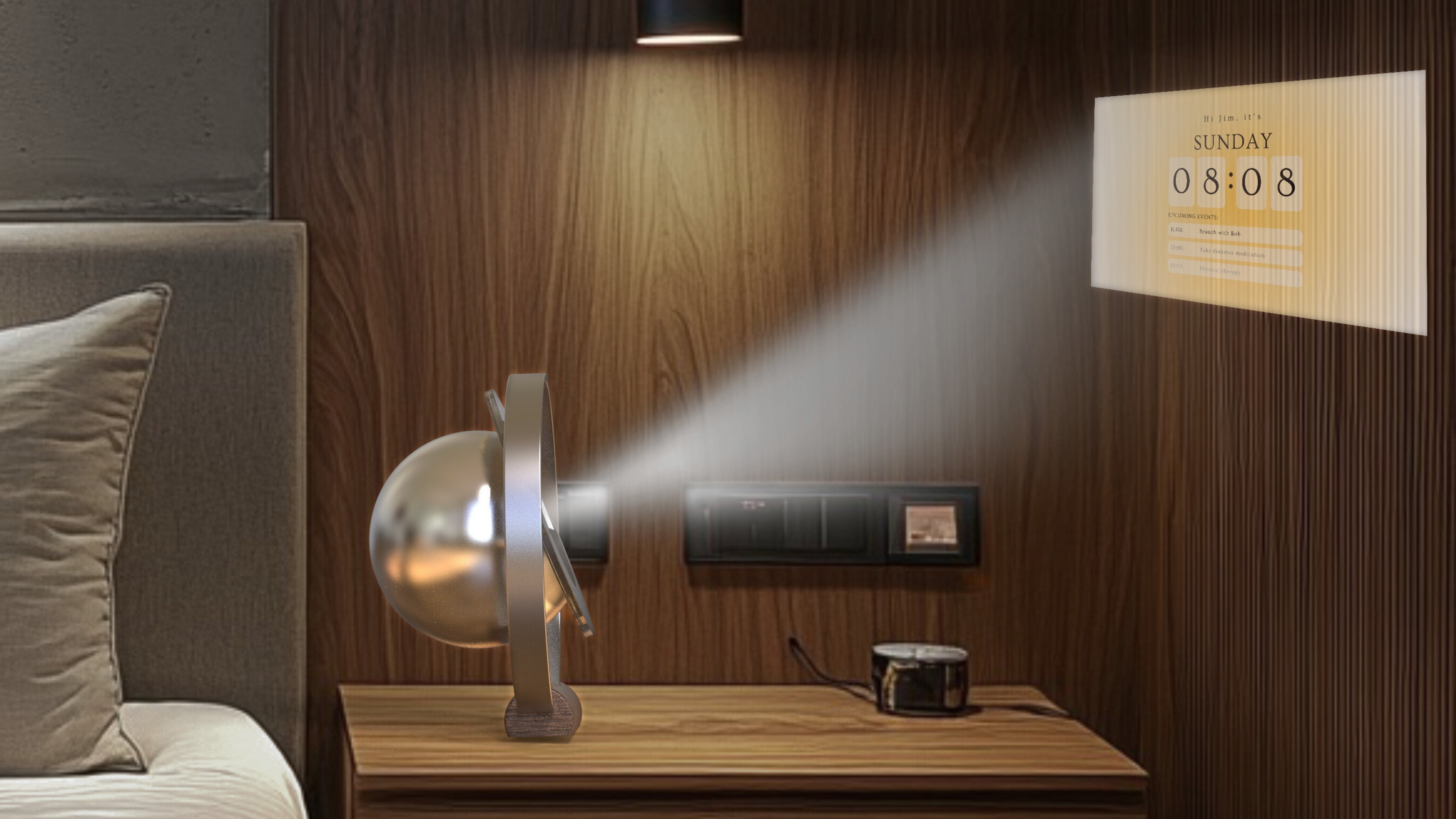
MemoSphere helps them find it again
- gently, intuitively, beautifully.
THE GOAL
To support individuals with Alzheimer’s in recognizing time and reducing confusion, ensuring they can stay on schedule while minimizing cognitive effort and caregiver intervention.

Understanding Alzheimer's
Alzheimer’s disease is a progressive brain disorder that affects memory, thinking, and behavior. It gradually impairs a person’s ability to carry out daily tasks and leads to disorientation and cognitive decline.
Why does it matter?
1 in 9
Americans aged 65 and older are living with Alzheimer’s dementia, with numbers expected to rise dramatically by 2050.
(Alzheimer’s Association, 2025)
60%
of individuals with Alzheimer’s will wander or become lost at least once, posing serious safety risks.
(National Institute on Aging, 2023)
80%
of care for people with Alzheimer’s is provided by family members, highlighting the need for designs that reduce caregiver burden.
(Alzheimer’s Association, 2024)
Current solutions…



can be overwhelming
require users to learn complex interactions
are dependent on user compliance
rather than simply supporting their everyday life.

Expert Insights
PAIN POINTS
"Most solutions focus on slowing decline, but what’s missing are simple tools that just help them make sense of their world and live more comfortably."
— Anastasia Plyugina, specialist in Alzheimer's care and communication strategies
Unsafe Wandering & Lack of Environmental
Cues Disorientation & Confusion About Time
Caregiver Strain & Need for Passive Monitoring
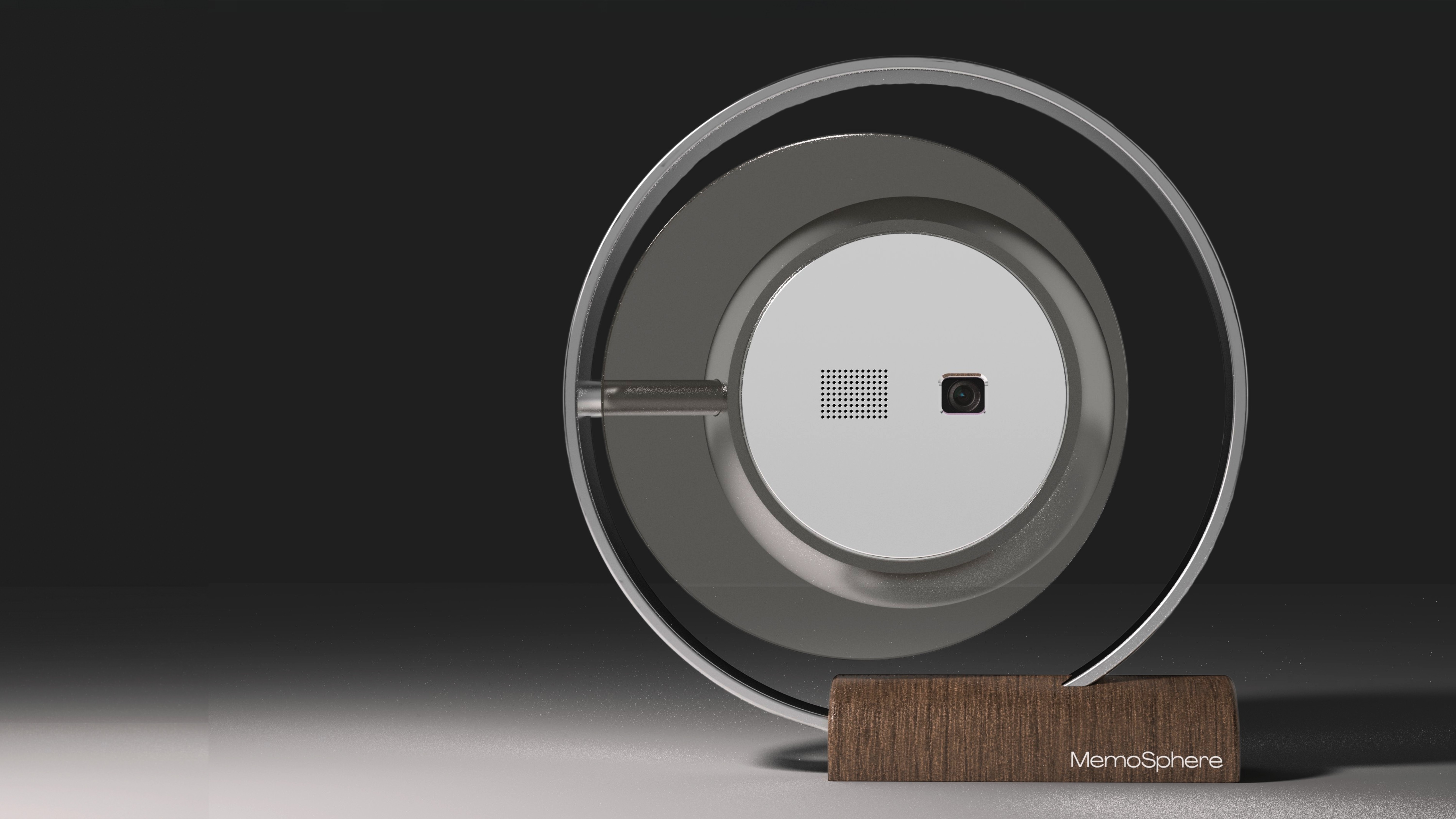
SOLUTION
A calm, intuitive light that brings time and memory back into focus.
Blue Light and Motion-Activated Nighttime Alert System
Default mode shows daily schedule and reminders
Red Light for Attention-Grabbing Daytime Reminders
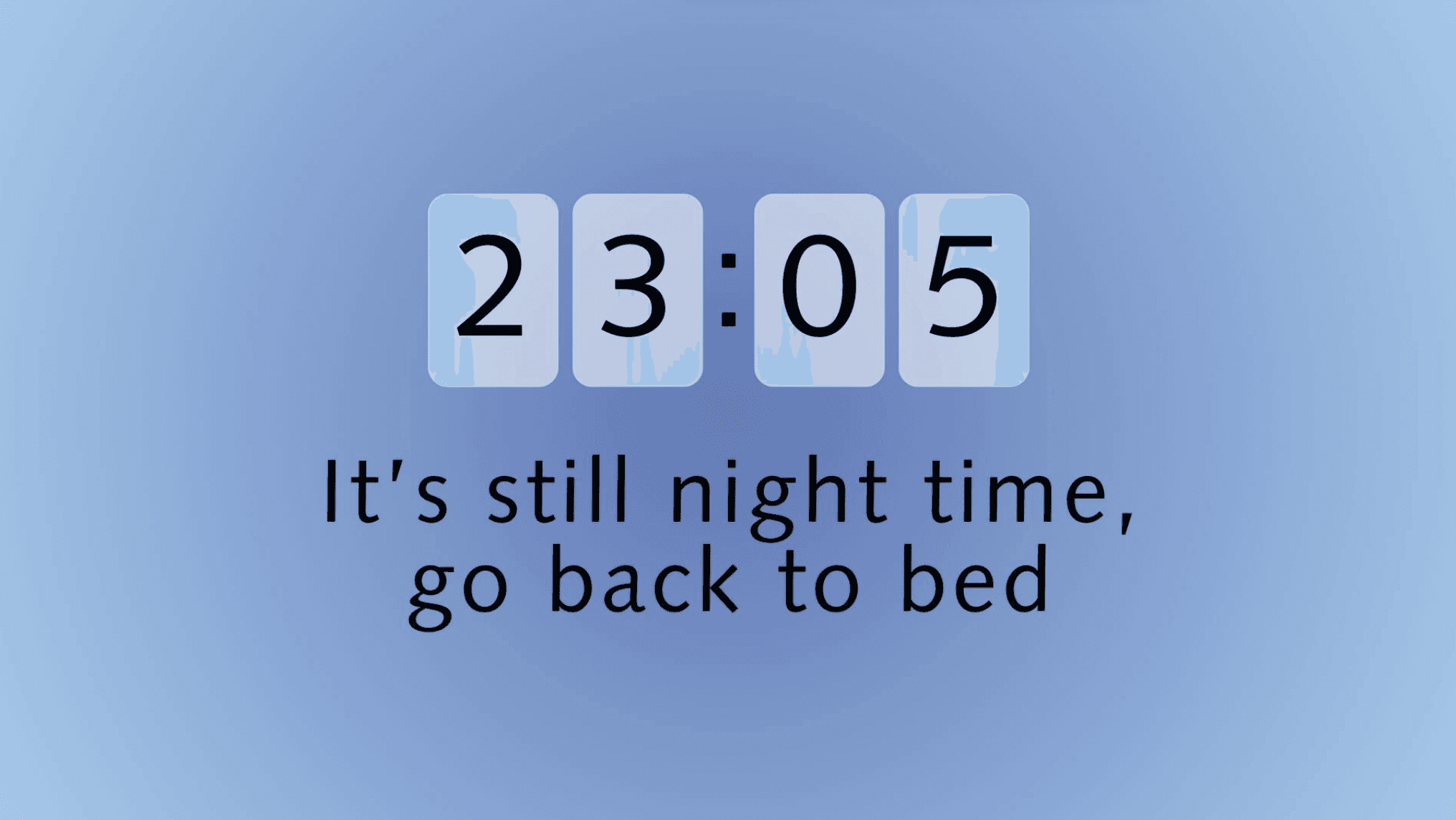
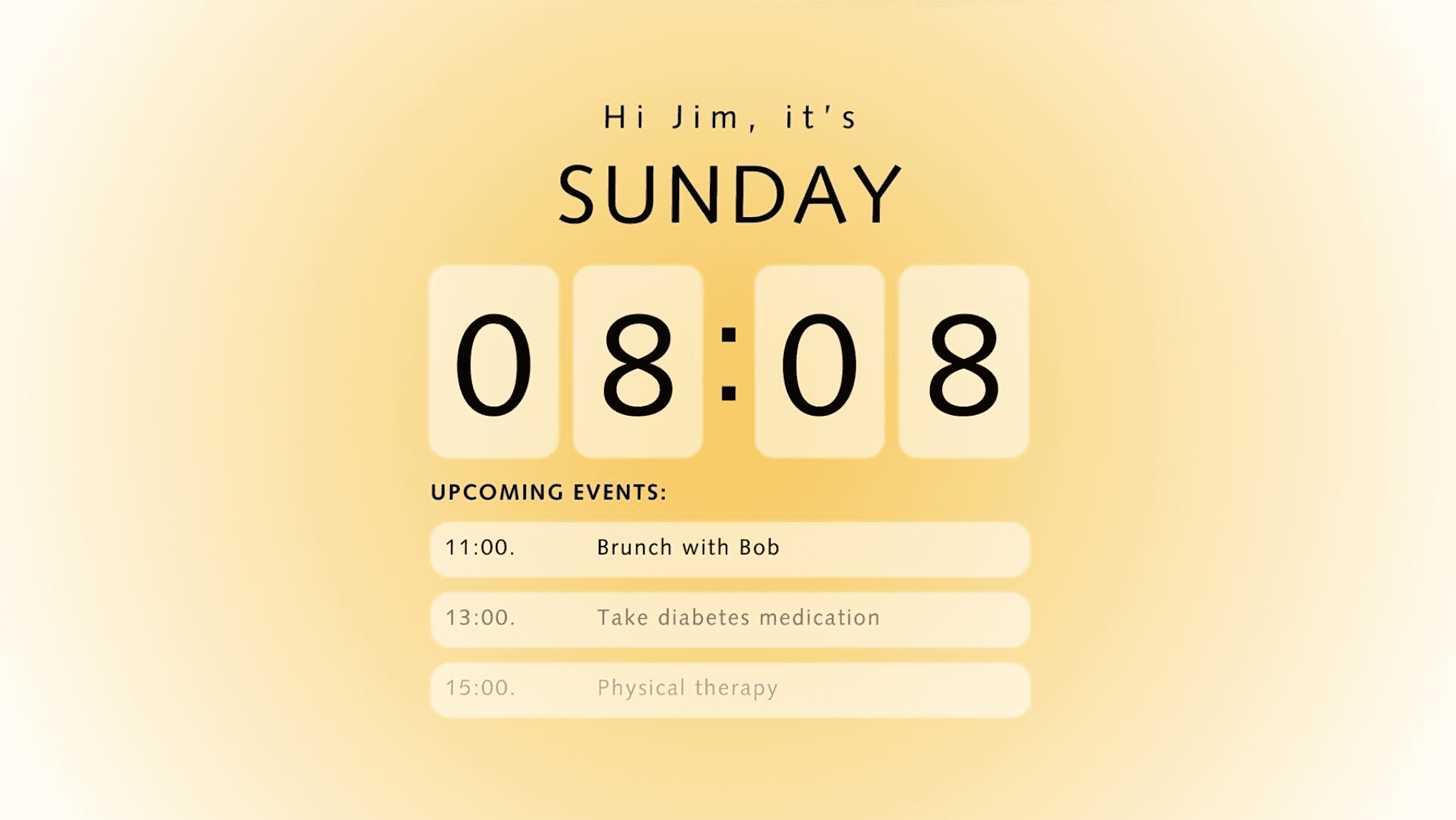
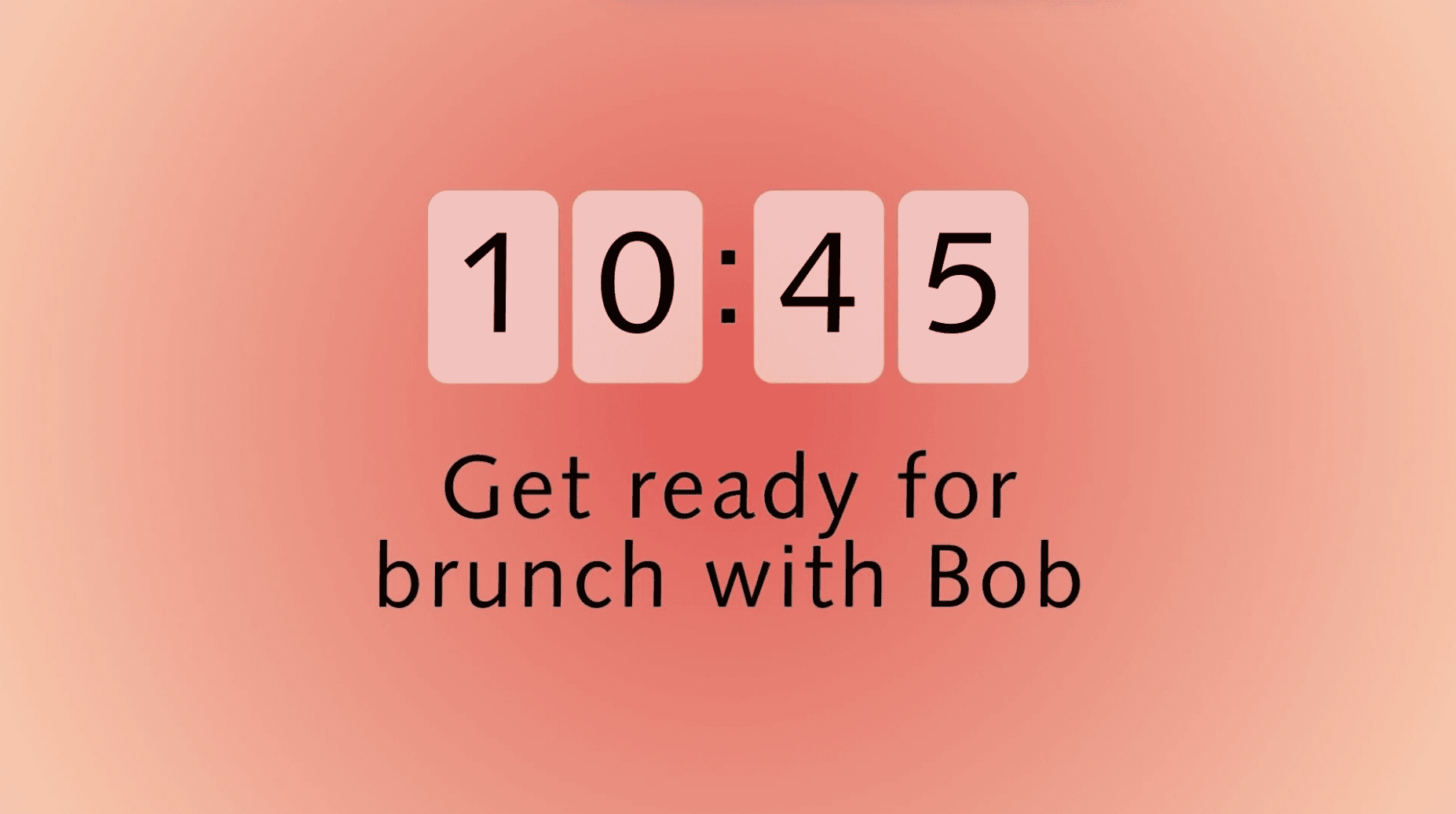
How does it work?
Supporting Research
According to The Advocate, blue is a calming color that lowers blood pressure and promotes relaxation, making it ideal for reinforcing nighttime rest. In contrast, red is the most attention-grabbing color, stimulating brain activity and effectively signaling daytime alerts and reminders. Research highlights that color-coded environments enhance navigation for individuals with dementia, helping them stay oriented and improving their overall quality of care. (The Advocate, 2016)

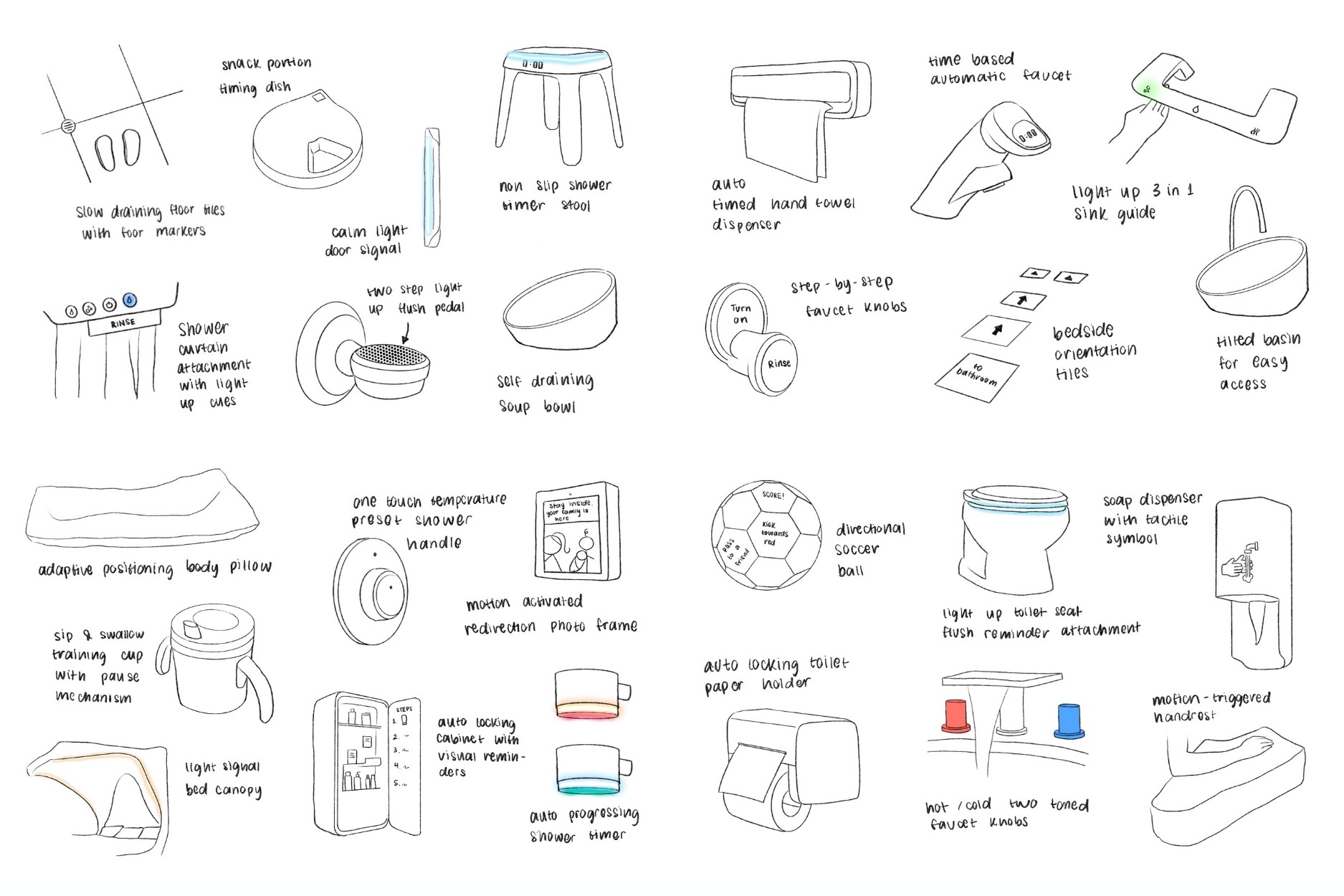
Geometric Minimalism
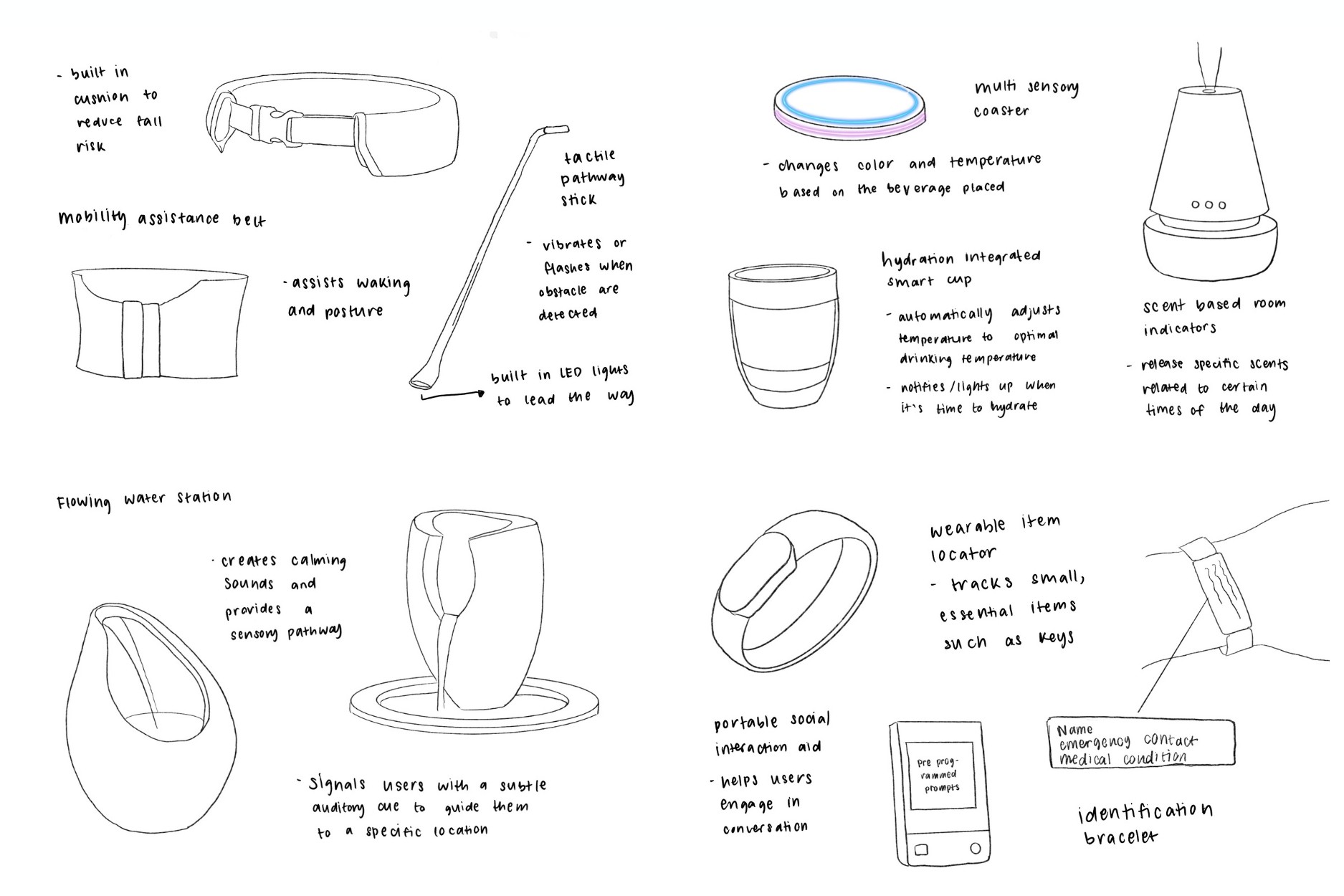
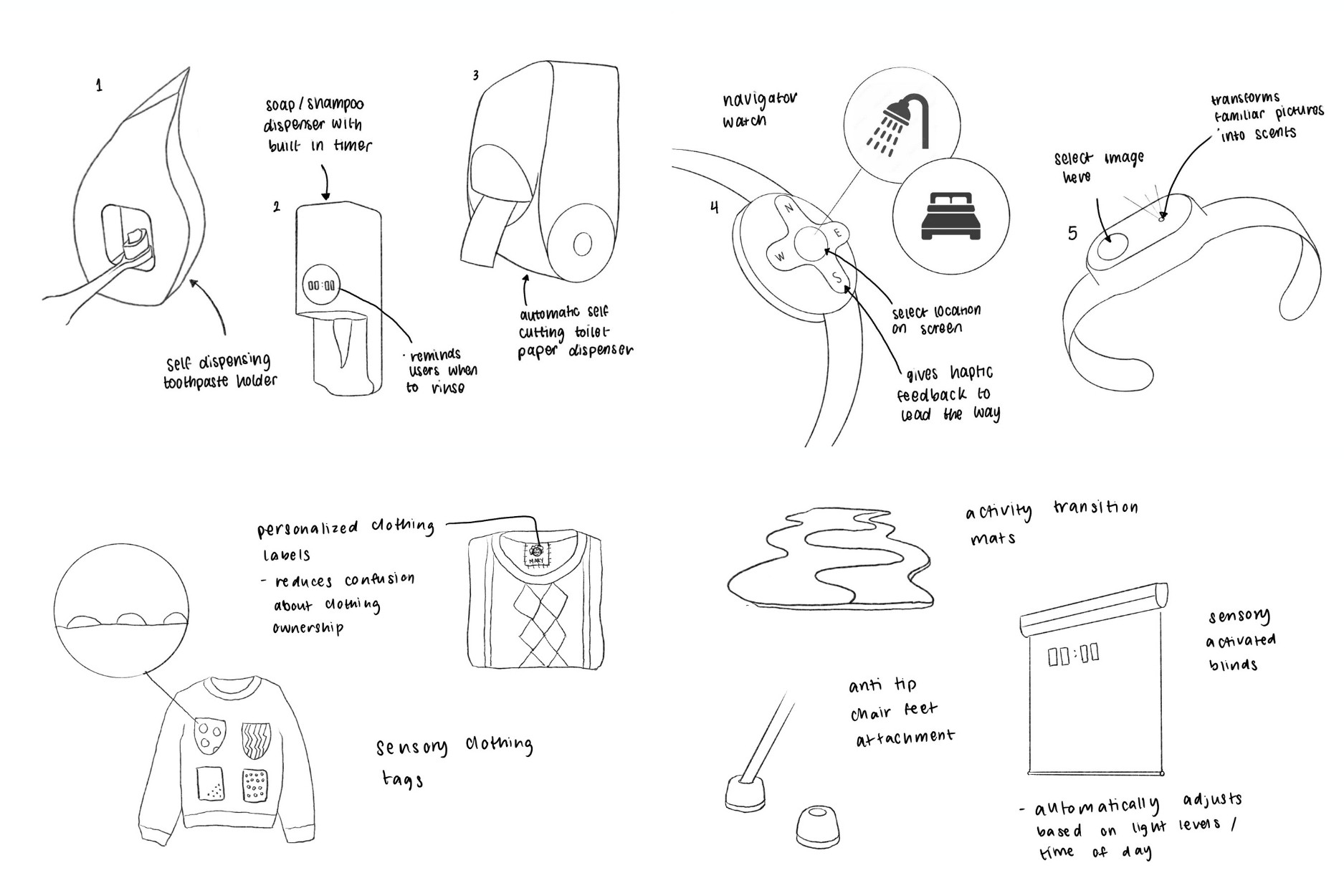
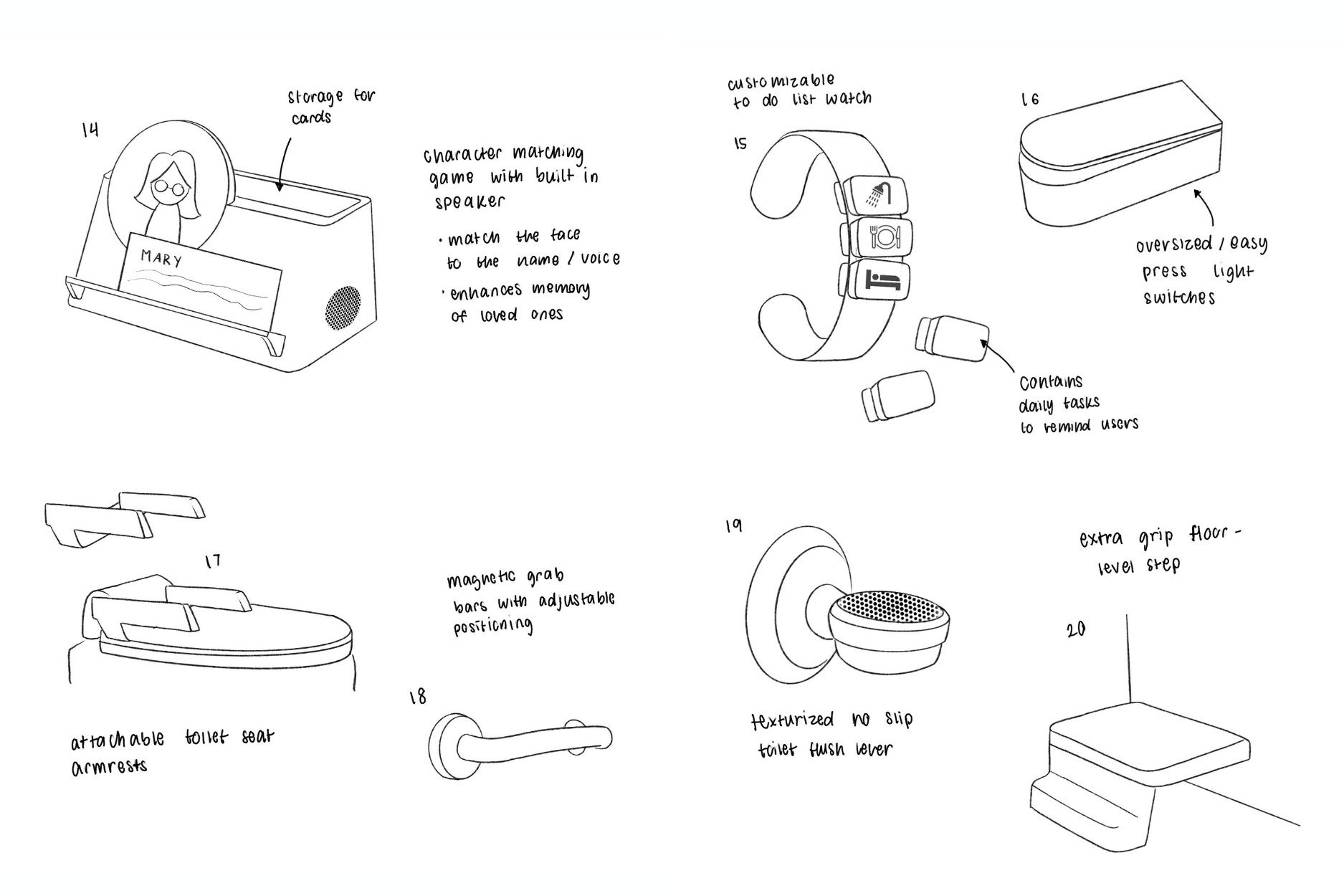
Concept Development
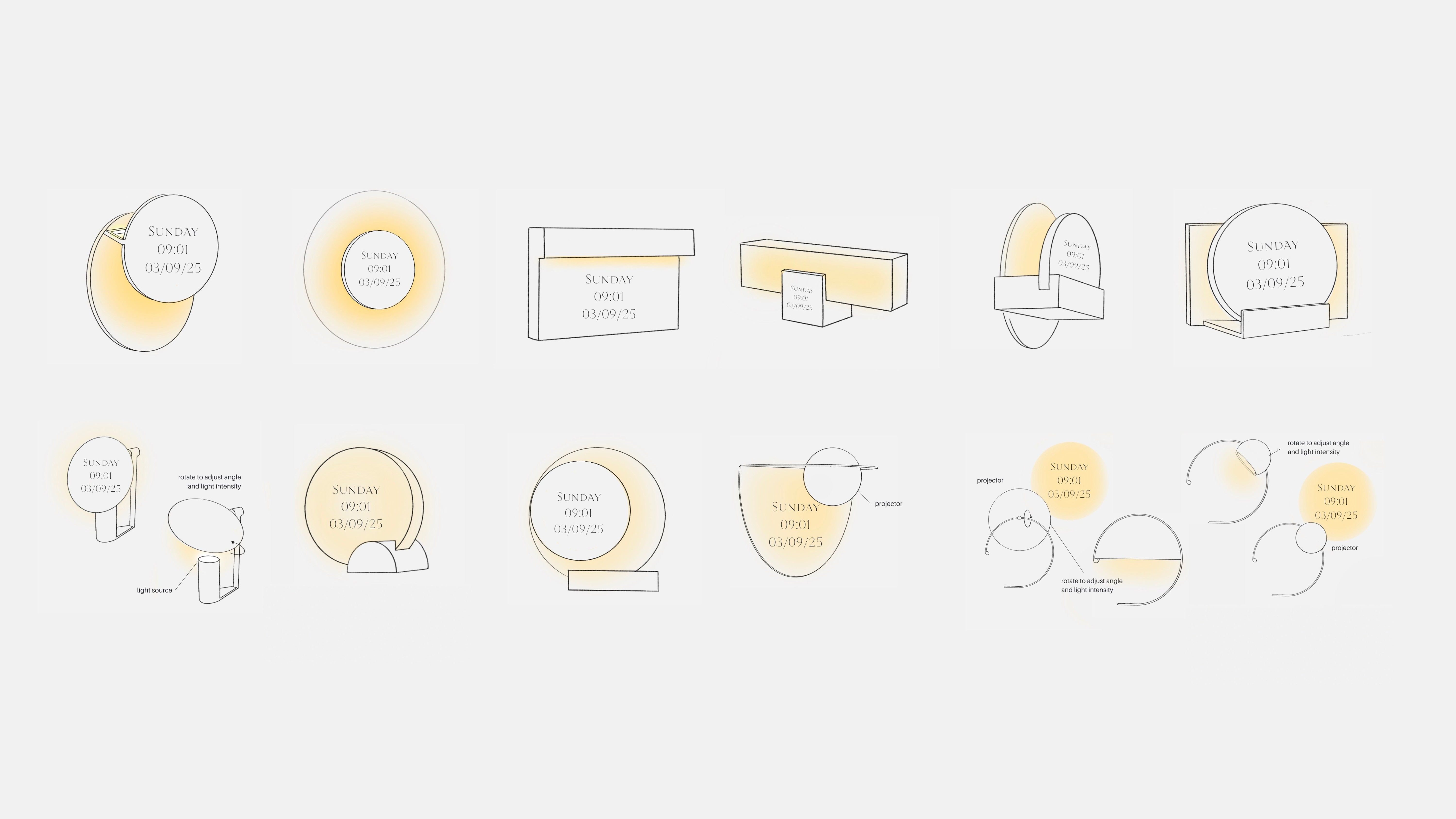
Form Development

CMF
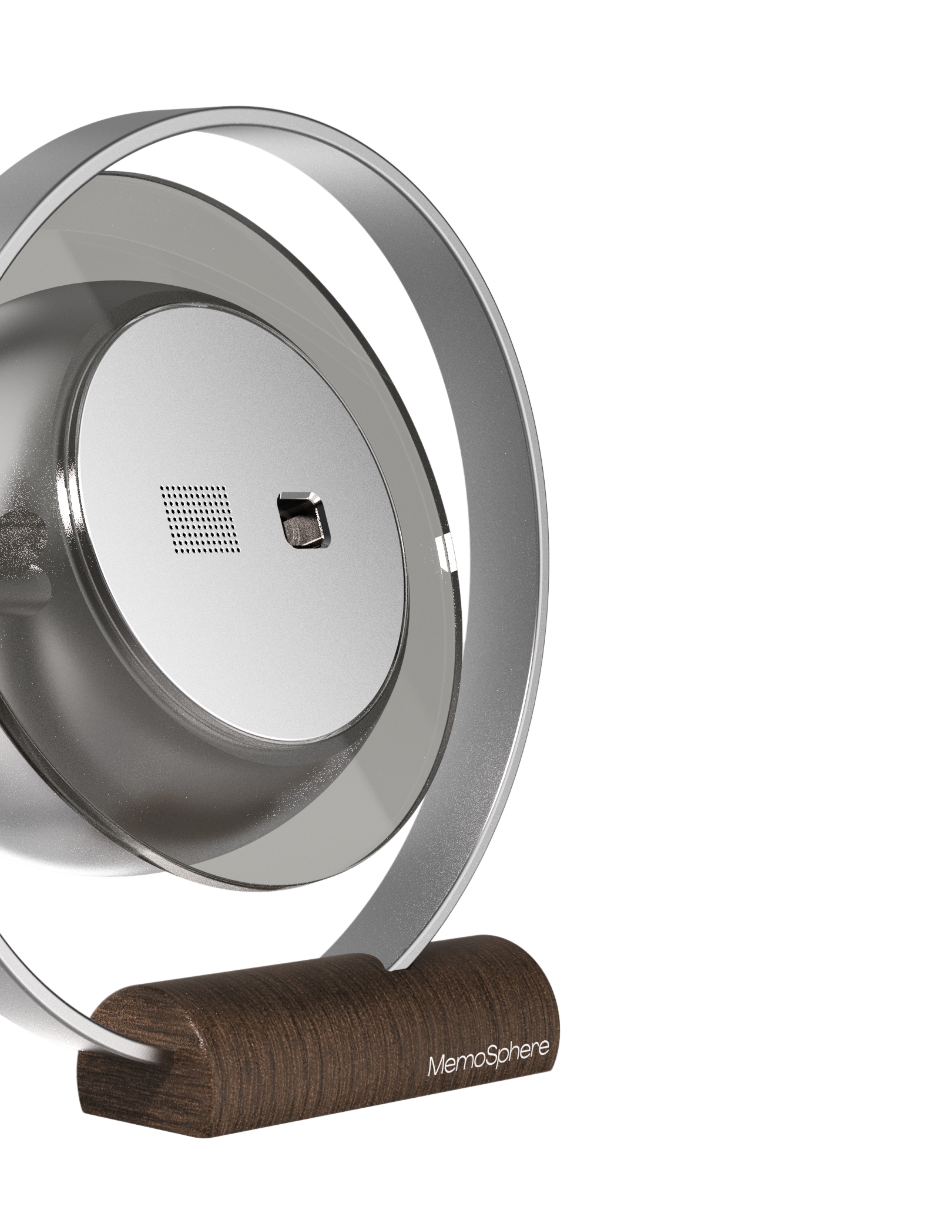



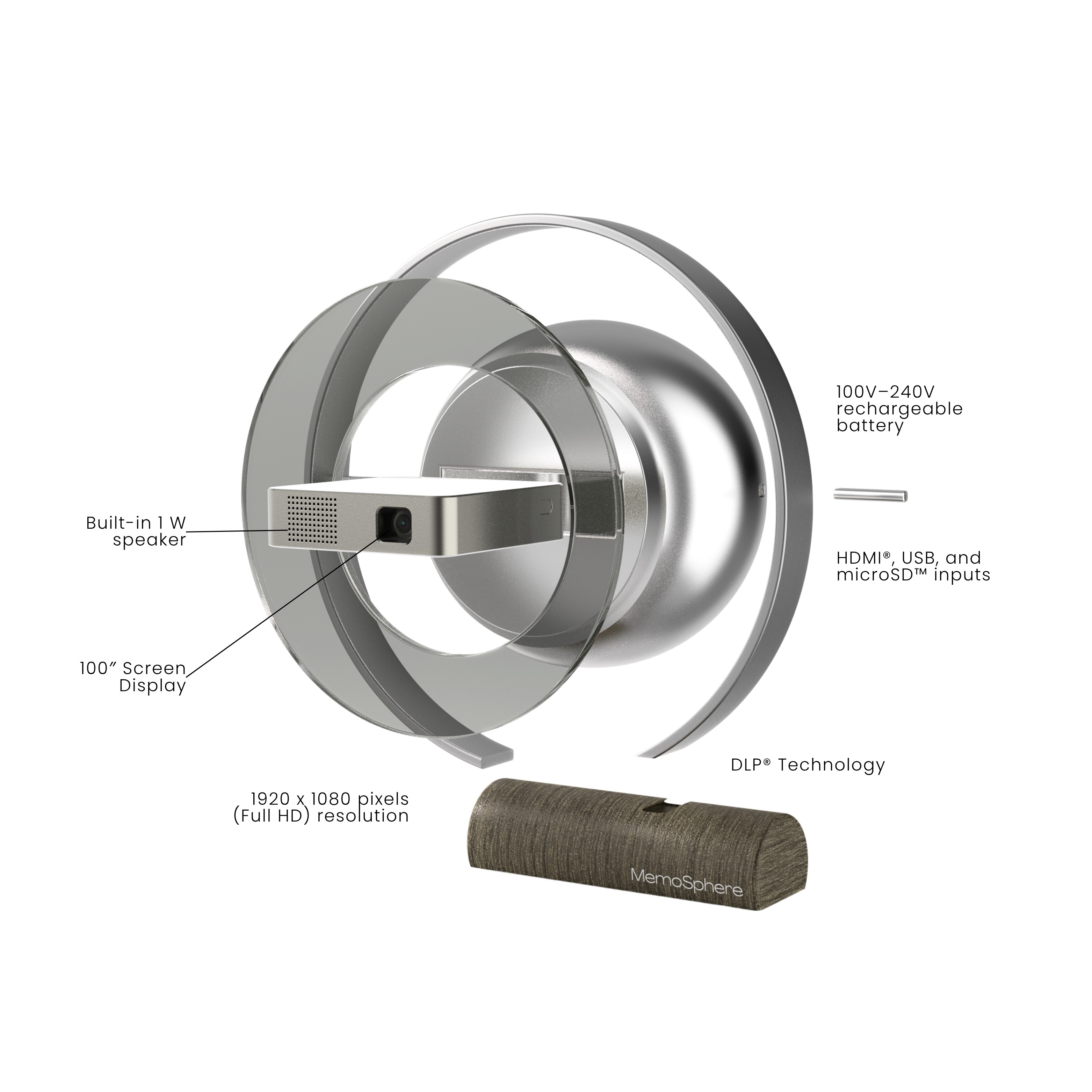
Tech Pack
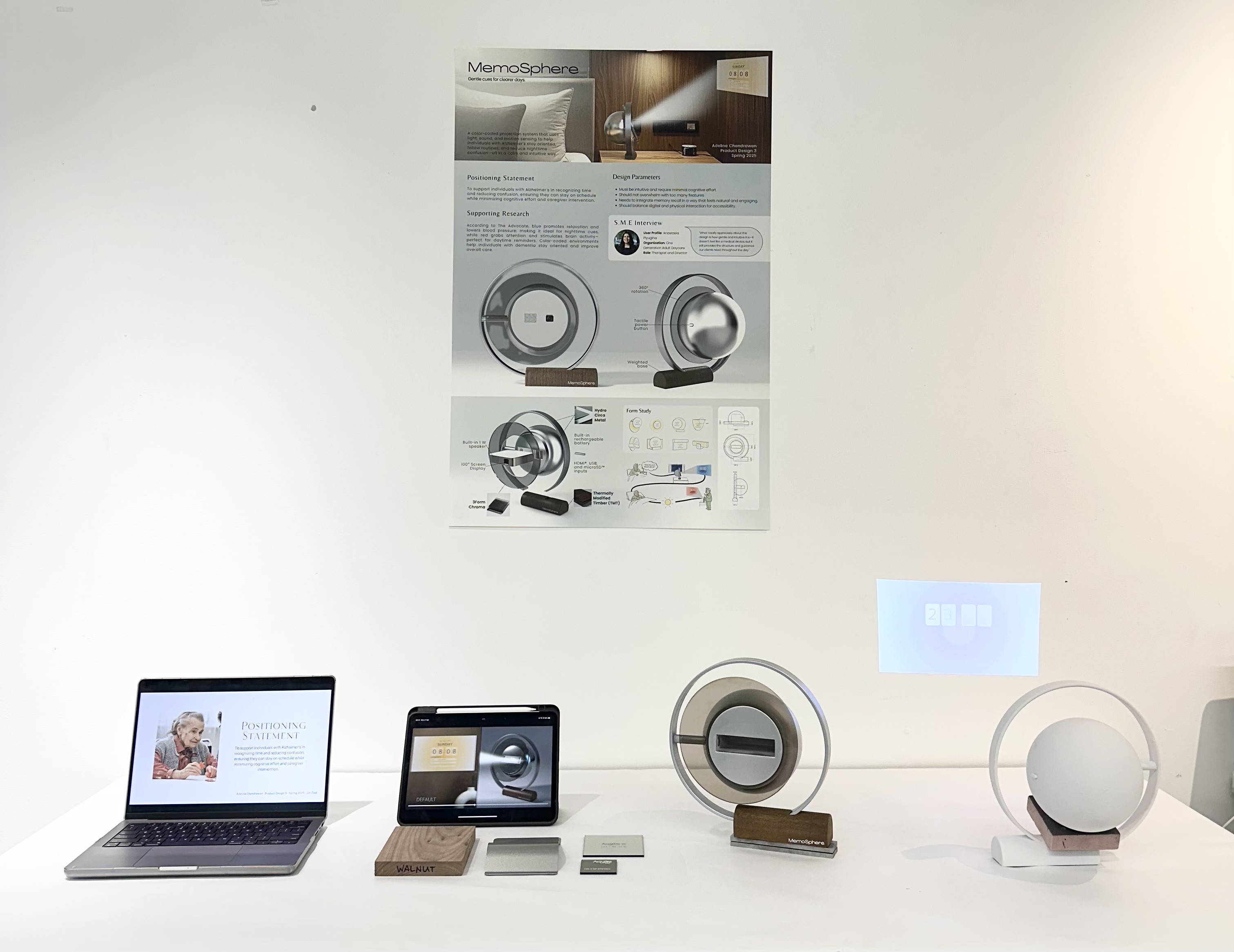
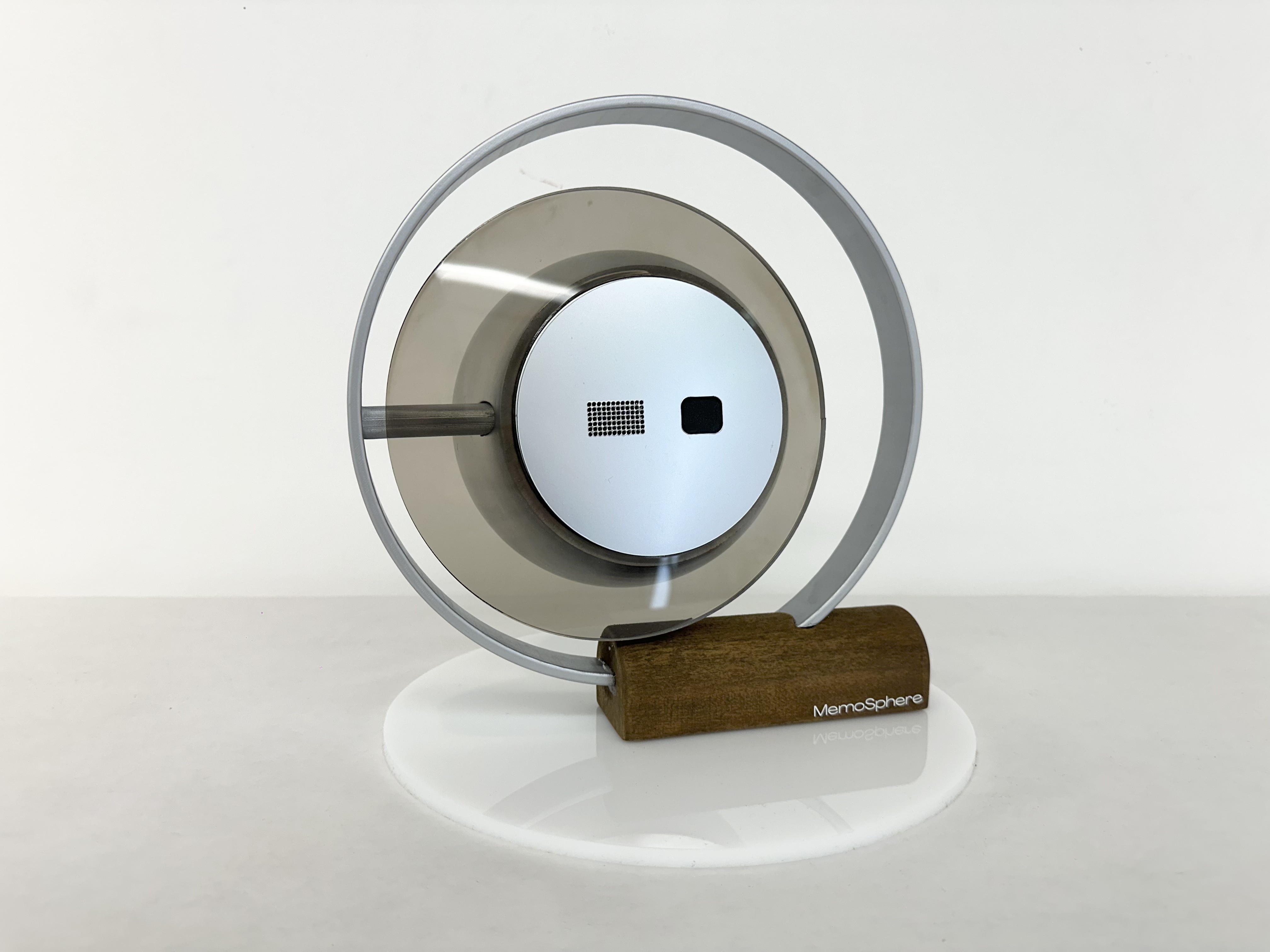
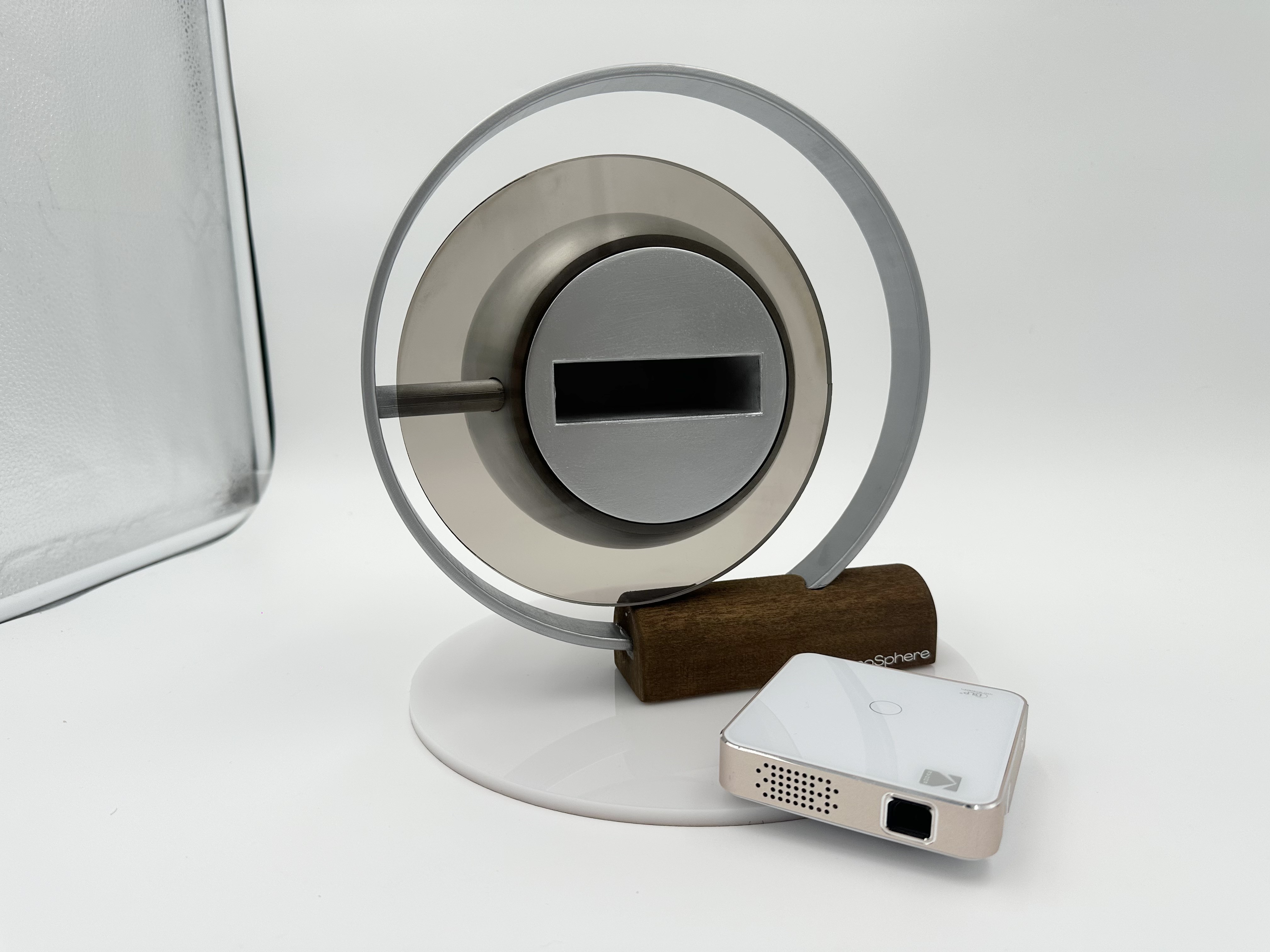
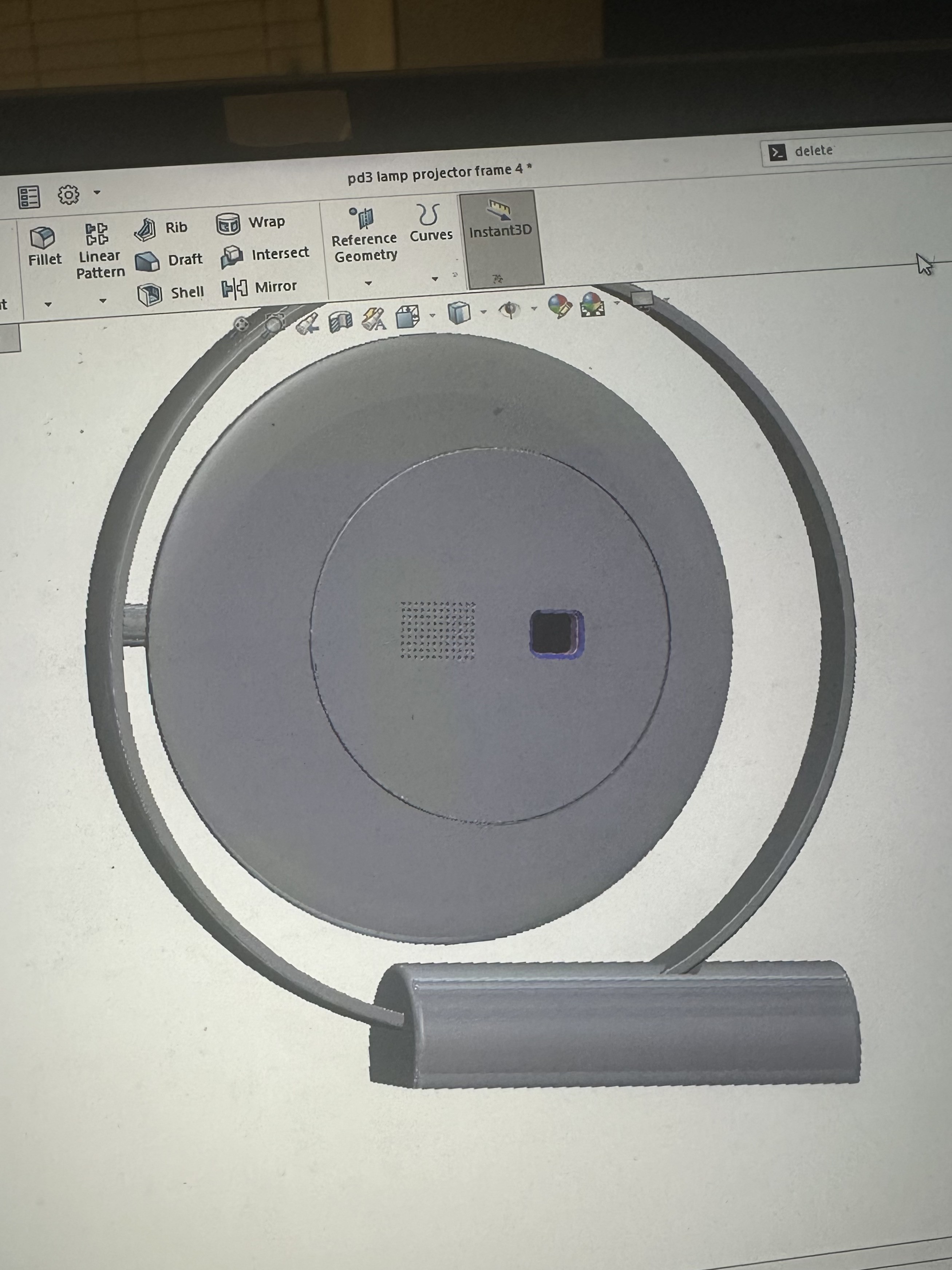

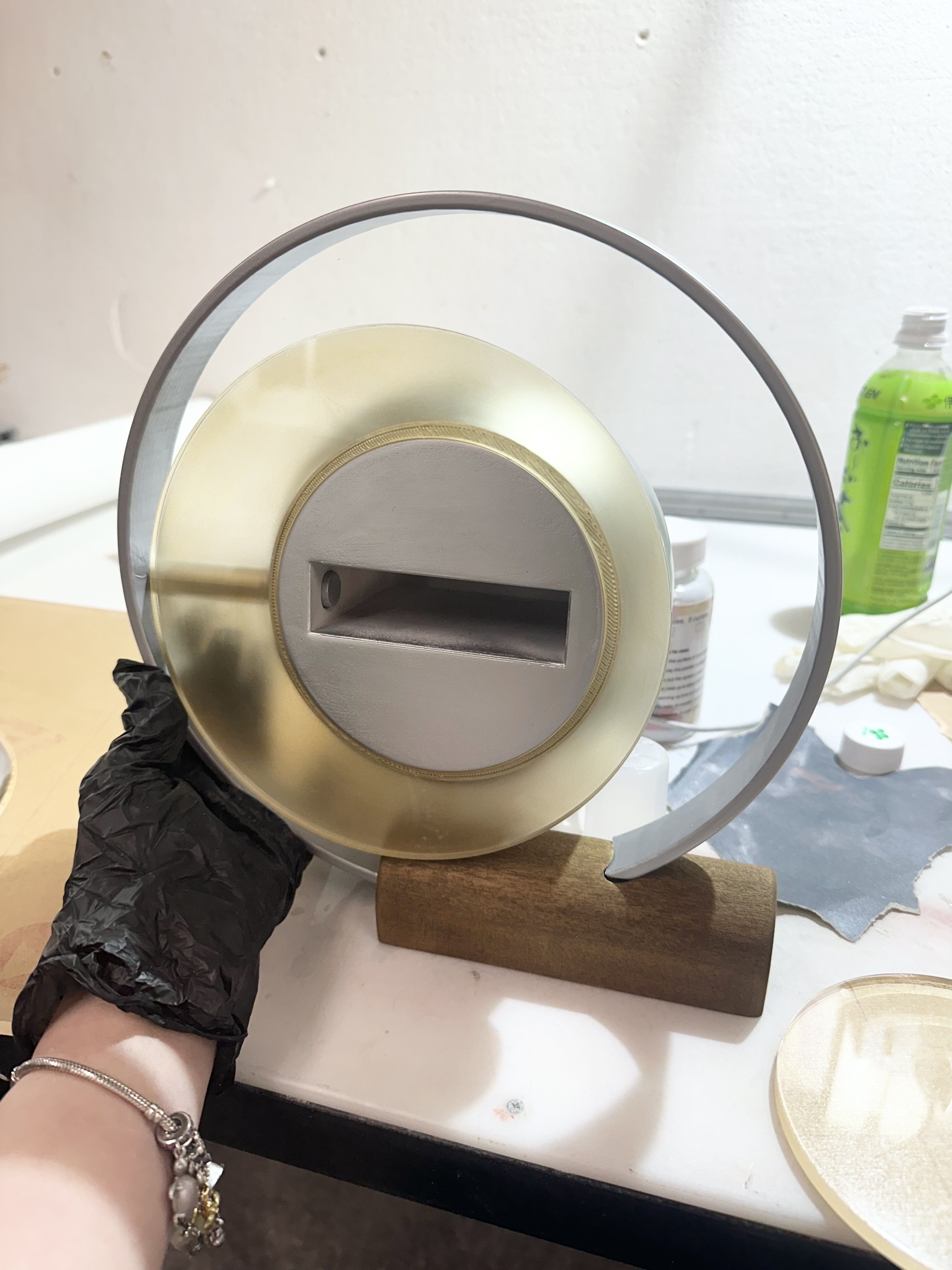
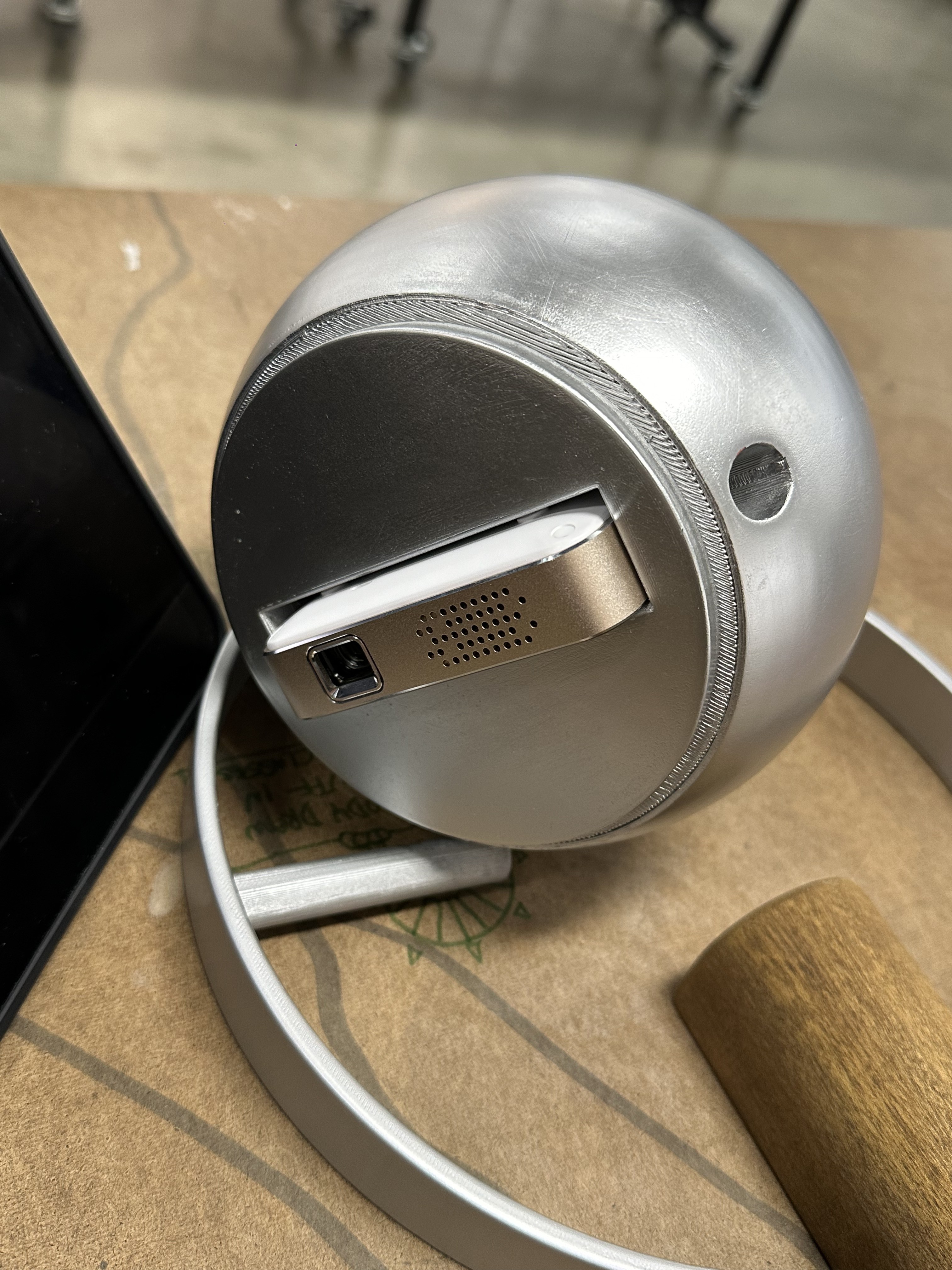
Prototyping Process